
This article explains how activated carbon removes residual chlorine, why coconut shell and nut shell carbons are ideal, and where these materials are commonly applied.
.jpg)
What Is Residual Chlorine?
Residual chlorine refers to the amount of chlorine that remains after water has been disinfected. It exists primarily as:Free chlorine: HOCl, OCl⁻
Combined chlorine: chloramines
While essential for killing pathogens, residual chlorine can result in:
• Bad taste and odor in drinking water
• Corrosion of RO membranes and metal pipelines
• Reduced performance of biological treatment systems
• Formation of carcinogenic disinfection by‑products (DBPs)
• Harmful effects on aquaculture and sensitive industrial processes
Proper chlorine removal is crucial for ensuring saf
Why Coconut Shell & Nut Shell Activated Carbon Are Ideal for Chlorine Removal
Among all activated carbon materials, coconut shell and nut shell activated carbons show the highest efficiency for dechlorination. Their advantages include:
1. High Microporosity and Large Surface Area
Coconut and nut shell activated carbons contain a vast number of micropores ideal for capturing chlorine molecules and reaction intermediates.
2. Strong Catalytic Activity for Dechlorination
These carbons naturally accelerate the decomposition of free chlorine and chloramines into harmless chloride ions.
3. Excellent Hardness and Long Service Life
Shell-based activated carbon is harder and more wear-resistant than many other types, maintaining long-term performance in filtration systems.
4. Low Ash and Superior Purity
Low ash content ensures less interference with chemical reactions and maintains stable water quality.
5. Sustainable, Renewable, and Eco-Friendly
Made from natural shells, these carbons are biodegradable, safe for the environment, and generate no secondary pollution.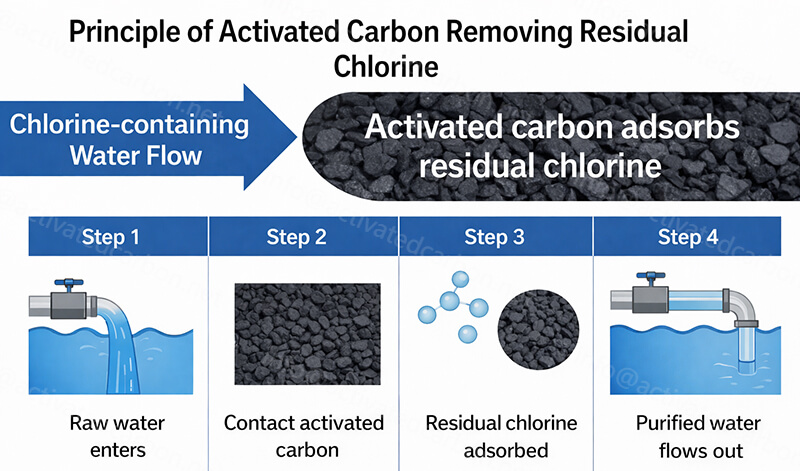
How Activated Carbon Removes Residual Chlorine
Activated carbon removes chlorine mainly through catalytic reduction, supplemented by adsorption:
Catalytic Reaction
Activated carbon accelerates the reaction:
HOCl + Activated Carbon → Cl⁻ + Oxidized Carbon Surface + H⁺
This occurs almost instantly when water passes through a carbon bed.
Adsorption of Chloramine and By‑Products
Chloramines and dissolved DBP precursors are captured within the pores, ensuring complete dechlorination.
With its dual mechanisms, coconut and nut shell activated carbon offers extremely fast reaction speed and stable performance.
Benefits of Shell-Based Activated Carbon for Dechlorination
- Rapid and complete chlorine removal
- Significant improvement in water taste and odor
- Protects RO membranes and industrial equipment
- Enhances biological treatment performance
- Prevents harmful DBP formation
- Long service life and low operating cost
- 100% chemical-free, safe, and environmentally friendly
- Easy integration with existing filtration systems
Applications of Activated Carbon for Residual Chlorine Removal
Coconut & Nut Shell-based activated carbon is widely used in:
- Municipal drinking water treatment
- Household and commercial water purification systems
- Reverse osmosis (RO) pre-treatment
- Food & beverage production
- Pharmaceutical and medical water systems
- Aquaculture and hatcheries
- Swimming pools and spas
- Industrial process water
- Cooling towers
Its versatility makes it suitable for both low-flow domestic systems and high-flow industrial applications.
Conclusion
Activated carbon—especially coconut shell and nut shell types—is one of the most effective and sustainable solutions for removing residual chlorine from water. Its strong catalytic action, fast dechlorination rate, and long service life make it ideal for drinking water facilities, industrial treatment systems, and any process requiring chlorine-free water.
If you need help selecting the right activated carbon type for your chlorine removal application, feel free to contact us—we provide technical support and tailored solutions for all water treatment needs.