
Activated carbon—especially in modified, pelletized, or biologically enhanced forms—has proven to be an efficient and reliable adsorbent for controlling nitrogen and phosphorus pollutants. It offers stable performance, strong adsorption capacity, and compatibility with both physical and biological water treatment processes.
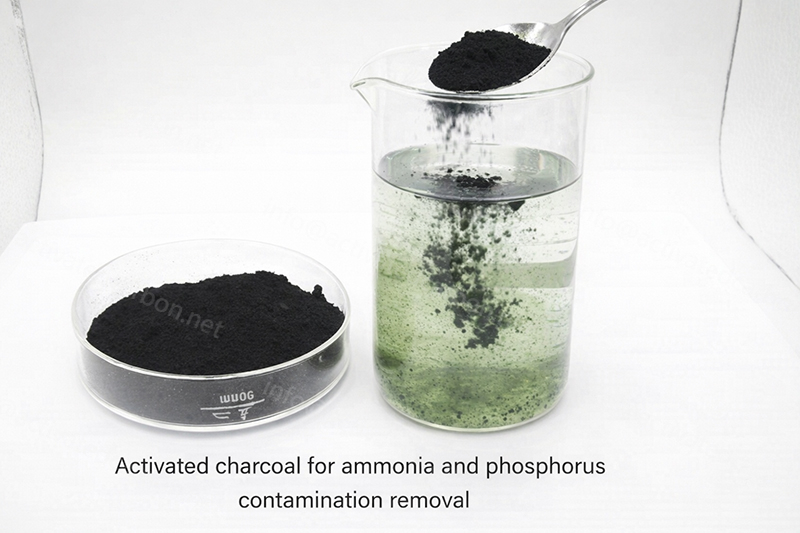
What Are Nitrogen and Phosphorus Pollutants?
Nitrogen and phosphorus contamination typically originates from:• Agricultural runoff
• Sewage and domestic wastewater
• Food processing wastewater
• Fertilizer production
• Chemical and pharmaceutical industries
• Aquaculture discharge
These pollutants can appear in multiple forms:
• Ammonia (NH₃/NH₄⁺)
• Nitrite (NO₂⁻)
• Nitrate (NO₃⁻)
• Organic nitrogen compounds
• Phosphorus pollutants:
• Orthophosphate (PO₄³⁻)
• Condensed phosphate
• Organic phosphorus compounds
If untreated, they can cause algae outbreaks, water quality degradation, and ecosystem destruction.
How Activated Carbon Works for Nitrogen and Phosphorus Removal
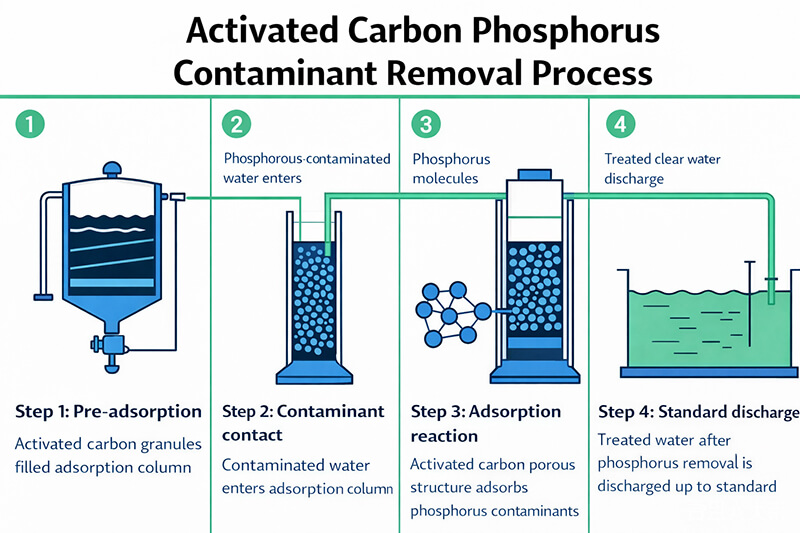
Activated carbon removes nitrogen and phosphorus through a combination of physical, chemical, and biological mechanisms:1. Adsorption
Captures dissolved organic nitrogen compounds, ammonia-related organics, and organophosphorus compounds.
2. Surface complexation
Modified activated carbons (iron, lanthanum, aluminum) form stable complexes with phosphate ions.
3. Biofilm carrier effect
Biologically activated carbon (BAC) promotes nitrifying and denitrifying bacterial growth for ammonia, nitrite, and nitrate removal.
4. Chemical precipitation
Metal-oxide‑impregnated activated carbon forms insoluble phosphate precipitates.
5. Reduction of COD/TOC
Lower organic load enhances downstream biological nitrogen removal efficiency.
This combination makes activated carbon an indispensable material for nutrient pollution control.
Applications of Activated Carbon in Nitrogen and Phosphorus Control
Activated carbon is widely used in:
•Municipal wastewater treatment plants
•Rural sewage treatment
•Aquaculture and aquariums
•Agricultural runoff purification
•Food and beverage wastewater
•Chemical and pharmaceutical wastewater
•Lakes, rivers, and reservoir remediation
•Stormwater treatment systems
Whether used for adsorption, biological filtration, or advanced polishing, activated carbon integrates seamlessly into multiple treatment stages.
FAQ:
1. Can activated carbon remove ammonia, nitrate, and nitrite?
Yes, especially when used as biologically activated carbon (BAC). BAC supports beneficial bacteria that convert ammonia → nitrite → nitrate → nitrogen gas.
2. Is activated carbon effective for phosphorus removal?
Standard carbon has limited phosphate adsorption, but iron‑ or lanthanum‑modified activated carbon provides excellent phosphorus removal performance.
3. Does activated carbon work for organic nitrogen?
Yes. Activated carbon efficiently removes organic nitrogen compounds, such as urea, proteins, amino acids, and organic amines.
4. How long does activated carbon last in nitrogen and phosphorus applications?
Service life varies depending on:
•Pollutant concentration
•Flow rate
•Water chemistry
•Whether the carbon is modified or biological
•Modified carbon used for phosphate removal often lasts 3–12 months, while BAC can function for years with proper maintenance.
5. Can activated carbon be combined with other treatment technologies?
Absolutely. It works well with:
•Membrane systems
•Ion exchange
•Biological treatment
•Coagulation and precipitation
•Sand filtration
This makes it an ideal polishing medium for advanced treatment processes.
Conclusion
Activated carbon is a highly effective and versatile solution for removing nitrogen and phosphorus pollutants from water. Its ability to adsorb, bind, and biologically convert nutrient pollutants makes it suitable for municipal wastewater, industrial treatment, drinking water systems, aquaculture, and environmental remediation.
Whether you need high‑performance phosphate removal, ammonia reduction, or full‑spectrum nitrogen control, the right activated carbon product can significantly improve your treatment efficiency.
If you need help choosing the best activated carbon type for your application, feel free to contact us—we can recommend the most suitable carbon grade for your system.